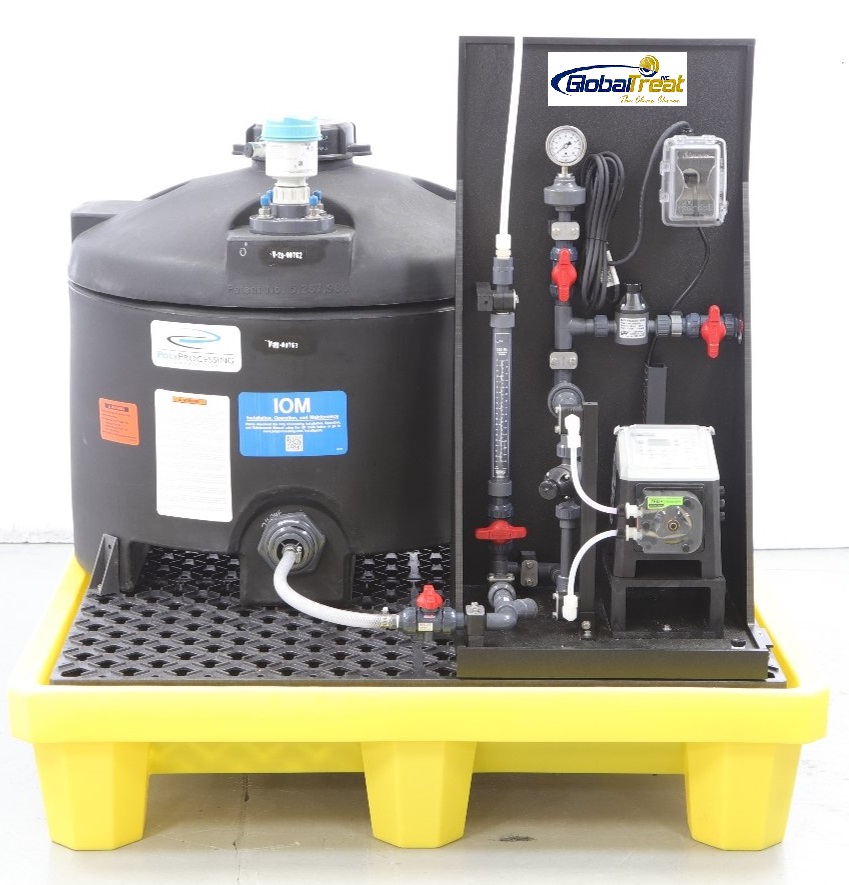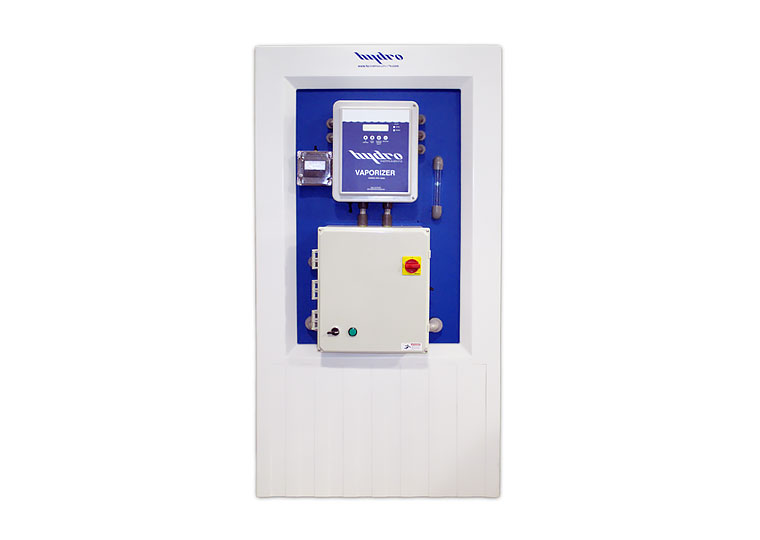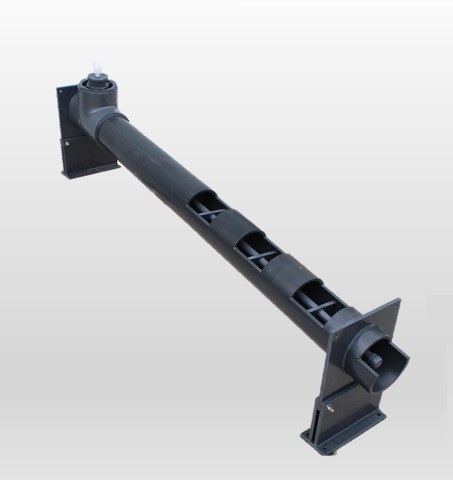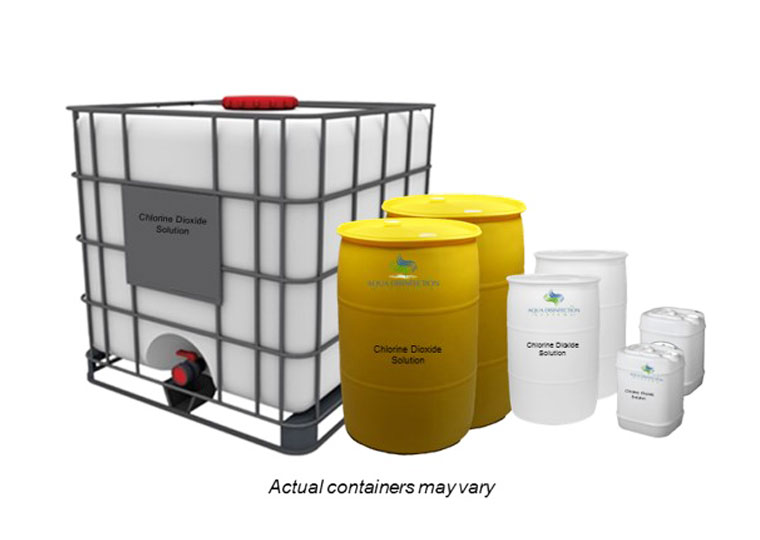



Chlorine Dioxide Generator for waste water disinfection/treatment systems
call for fast service, prices & shipping on chlorine analyzer click for Trade Shows

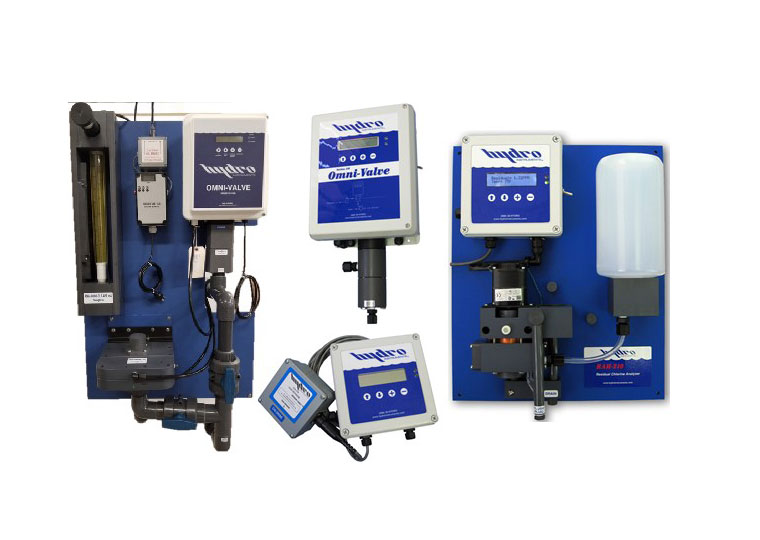
RAH-210 Residual Chlorine Monitor & Analyzer

Our line of chlorine residual monitors includes Hydro Instruments' ampermetric analyzer. The Series RAH-210 Analyzer determines residual chemical levels in the sample water. The measurement cell consists of large Copper and Gold electrodes in direct contact with the sample water. This reagent-free analyzer is continuous and does not rely on older "sample and hold" methods --- thus it provides a much improved process control.

Note: Food-grade vinegar can be used as the pH buffer reagent if the water pH varies. If pH is relatively constant and you are measuring free chlorine, no buffer solution is required.

RAH-210 Residual Analyzer
Main Features:
  • Measures free, or total chlorine
  • Detects Chlorine Dioxide levels
  • Monitors Bromine and Iodine
  • pH and Temperature Compensation
  • Uses food grade vinegar for buffer solution
  • Optional PH probe compensation available
  • Continuous measurement meter
  • Standard PID controller set point residual
  • Continuous sensor cleaning mechanism
  • Adjustable measurement range
  • Alarm contact relay for signal loss
  • Two loop powered 4-20 mA inputs and one
   4-20 mA output

Maintenance:
A continuously driven cleaning system is employed to prevent a concentration of impurities on the surface of the electrodes which reduces the need for maintenance.

» Specifications Sheet » Download Brochure » Analyzer Comparison Flowchart
 
Details:
The Series RAH-210 Free Chlorine Analyzer is available with pH & Temperature compensation performed in software. For applications with consistent pH levels in the process water, the known pH value can be manually input for software compensated residual analysis. A gravity driven buffer feed system is also available to inject the required chemicals for measuring Total Chlorine, Chlorine Dioxide, Iodine and Bromine.

Basic Specifications:

ELECTRICAL
• Power Consumption: 10 W max
• Power Requirements: 120VAC, 50/60 Hz or 240VAC, 50/60 Hz, single phase
• Output Signal: 4-20 mA
• Relay Contact: 10 Amps @ 120 VAC or 24 VDC, resistive load, 5 Amps @ 240 VAC, resistive
   load

MEASUREMENT
• Temperature Range: 0 to 50 C (32 to 120 F)
• Sample Water Flow Rate: 500 ml/minute (0.13 GPM or 8 gal/hr)
• Sample Pressure: 5 psig (0.3 bar) maximum at inlet point.
• Sample Supply: Continuous ~ Electrodes must be kept wet with fresh water.
• Speed of Response: 4 seconds ~ Full-scale residual change 90 to 120 seconds.
• Sample Water: Metal ions or corrosion inhibitors effect operation.
• Range: 0 to 0.1 to 0 to 20 mg/l (PPM) ~ Field adjustable.
• Accuracy: 0.003 mg/l or +/-1% of range, whichever is larger.
• Sensitivity: 0.001 mg/l (1 ppb)

RPH-250 - Probe-Style Residual Chlorine Analyzer

The Series RPH-250 Analyzer makes use of the Amperometric method to determine residual levels in the sample water. The measurement is continuous, not relying on sample and hold methods, thereby allowing for better process control. The Free-Chlorine probe offers easily replaceable membrane caps.

Because Chlorine residual measurement probes are sensitive to pressure and flow fluctuations, the RPH-250 is provided with everything needed to supply a steady sample water pressure at a consistent flow rate. A plastic pressure regulating valve with an attached pressure gauge is included with each unit. An integrally designed flow control valve and graduated metering tube make setting and maintaining the sample flow a snap.

RPH-250 - Probe-Style Analyzer
RPH-250 Features:
• Amperometric probe-style residual analyzer
• Transparent probe & inlet flow cells
• Available range: 0-2, 0-5, or 0-10 PPM
• Allows simple calibration & maintenance
• Automatic pH compensation software included
• pH probe can be included (optional)
• PRV, pressure gauge, sample control valve &
   meter tube provided
• Cross-sensitive for: chlorine dioxide, ozone,
   iodine, bromine, bromamine, Di &
   Tri-chloramine
• Includes complete PID control program

» Specifications Sheet » Download Brochure » Analyzer Comparison Flowchart

 
Basic Specs:

ELECTRICAL
• Power Consumption: 16 VA
• Power Requirements: 120VAC, 50/60 Hz or 240VAC, 50/60 Hz, single phase
• Output Signal: (2) 4-20 mA
• Relay Contact: 10 Amps @ 120 VAC or 24 VDC, resistive load, 5 Amps @ 240 VAC, resistive
   load

MEASUREMENT
• Temperature Range: 5º to 45º C (41º to 113º F)
• Sample Water Flow Rate: 30-100 ml/minute / 8-26 gal/hr (must be kept steady)
• Sample Pressure: 15 psig (0.9 bar) maximum at inlet point
• Sample Supply: Continuous. Membrane must be kept wet with fresh water.
• Speed of Response: 10 seconds. Full-scale residual change 90 to 120 seconds.
• Sample Water: Metal ions or corrosion inhibitors effect operation.
• Range: 0-0.1 to 0-10 ppm. Field adjustable.
• Accuracy: 0.01 ppm or +/-1% of range, whichever is larger.
• Sensitivity: 0.01 ppm (10 ppb)

Different Forms of Chlorine

FREE CHLORINE
Free chlorine is defined as the concentration of residual chlorine in water present as dissolved gas (Cl2), hypochlorous acid (HOCl), and/or hypochlorite ion (OCl-). A test kit which measures free chlorine will indicate the combined concentrations of HOCl, OCl-, and Cl2.

COMBINED CHLORINE
Combined chlorine is defined as the residual chlorine existing in water in chemical combination with ammonia or organic amines which can be found in natural or polluted waters. Ammonia is sometimes deliberately added to chlorinated public water supplies to provide inorganic chloramines. This process is generally referred to as "chloramination."

TOTAL CHLORINE
Total chlorine is the sum of free and combined chlorine. When chlorinating most potable water supplies, total chlorine is essentially equal to free chlorine because the concentration of ammonia or organic nitrogen compounds (needed to form combined chlorine) will be very low.

When chloramines are present in a municipal water supply, total chlorine will be higher than free chlorine.


Make sure you're in compliance with the EPA's Final Ground Water Rule:
40 CFR ~ Parts 9, 141 and 142
(Federal Register November 08, 2006)

The purpose of this rule is to reduce the incidence of disease. The EPA has established a risk-based guide that targets ground water systems with vulnerability to fecal contamination. Any ground water system that's in danger of fecal contamination should implement a corrective action for reducing potential illness from microbial pathogens. Global Treat, Inc. has more information regarding disinfection and treatment with chlorine plus equipment monitoring options to help ensure that you are complying with the new GWR rules.

EPA logo EPA Information website:   Ground Water Rule & Guidelines


Chlorine Analyzer Support

Houston, Texas based Global Treat, Inc. offers its years of experience in water disinfection and wastewater treatment support services. Please call our office today for more detailed information on reagent-less chlorine analysers and monitor systems. Ph# (281) 370-3425.


Global Treat, Inc.
Phone: 1.800.370.4410
Fax: 281.370.3571
Contact Support

For chlorine analyzer distributorship information, click here


Wastewater Disinfection | Hypochlorite Generator | Gas Feed Chlorinators | Chemical Liquid Feed System
Automatic Valves : Gas Liquid | Solid Tablet Feeder Systems | Miscellaneous Chlorination Services
Chemical Induction Pumps | Gas Detectors | Gas Shut Off Valves | Vacuum Gas Liquid Monitors | Chlorine Industrial Scales | Fiberglass Buildings | Chlorine Test Kits & Accessories | New Chlorination Products

© Global Treat, Inc.

Other pages of interest:
Safety Protection Equipment | Inline Flow Meters | Accessories | Chlorine Dioxide Generator